Loading...
Serving Upland, CA and surrounding areas. (909) 755-8985
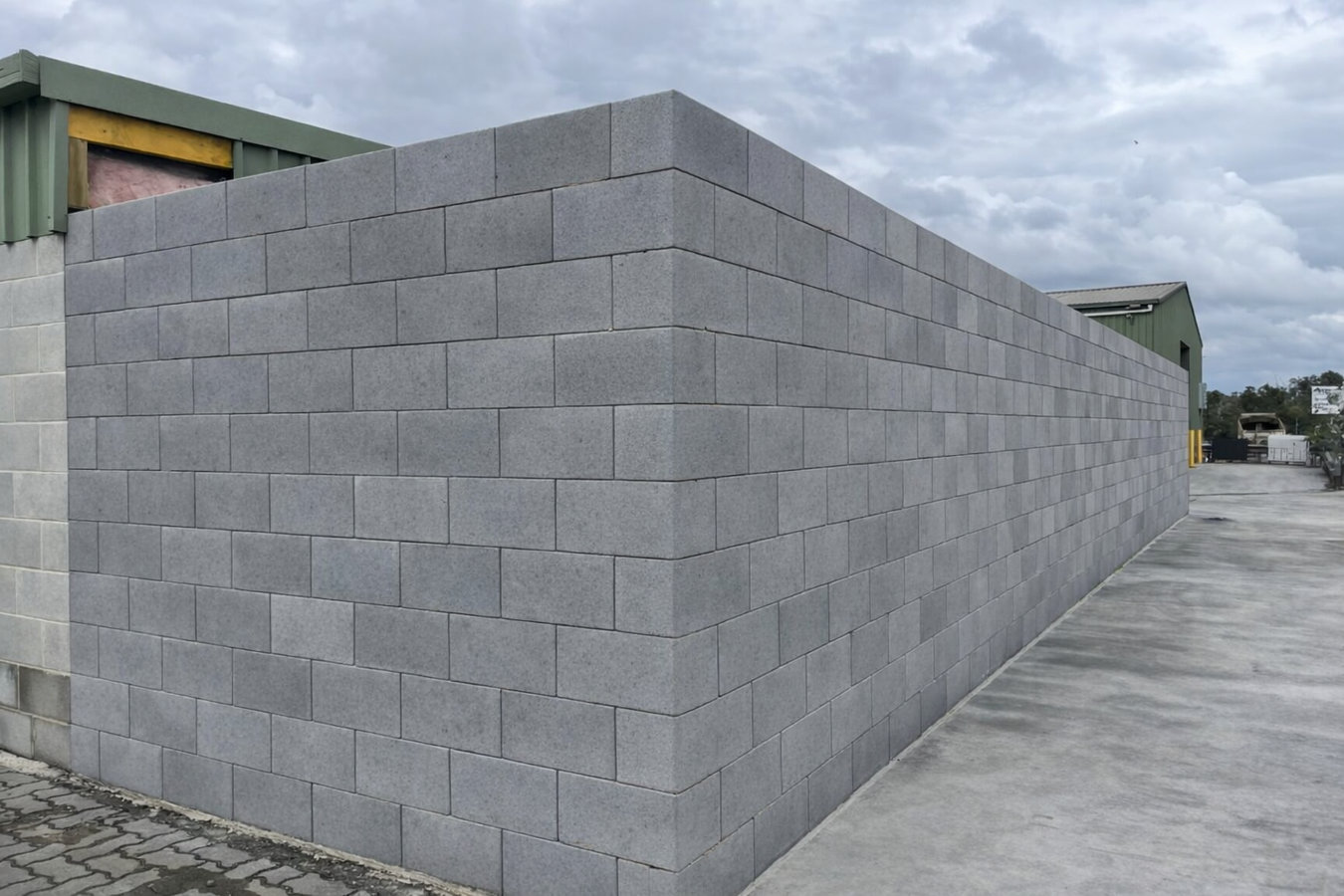
Wood fences rot, warp, and fail in Upland's climate. A concrete block wall gives you permanent privacy, property definition, and a structure that handles seismic requirements, clay soil movement, and HOA design review.
Concrete block wall construction in Upland involves pouring a reinforced concrete footing, stacking hollow blocks in overlapping rows with mortar, and filling the cores with steel rods and concrete, with a straightforward boundary wall typically completed in one to three days after the footing cures.
Most Upland homeowners choose concrete block walls because they are tired of replacing wood fences - or because they have a sloped yard that loses soil every time it rains and needs a real solution. The upfront cost is higher than wood, but the long-term value is straightforward: concrete block does not rot, warp, or attract termites. If you are planning a larger outdoor project, many homeowners combine block wall work with retaining wall construction to address both boundary and slope concerns in a single scope.
Because Upland requires permits for most walls over a certain height, and because the soil and seismic conditions here demand specific construction methods, choosing a contractor who knows this market is more important than it might seem for what looks like a simple project.
A wall that is visibly tilting or has diagonal cracks through the blocks is telling you something is wrong with its foundation or reinforcement. In Upland, this kind of damage is often caused by clay soil shifting over years of wet and dry cycles, or a footing that was not deep enough to begin with. A leaning wall does not always need to be torn down - but it needs a professional assessment before it gets worse or falls.
If you have a sloped section of yard that loses soil every time it rains, or if you notice the ground near a slope cracking or pulling away, a retaining wall may be the right fix. Upland gets occasional heavy rain events, and slopes without proper support can erode quickly. A concrete block retaining wall holds the soil in place permanently and can also create usable flat space in a yard that currently feels difficult to use.
If you have replaced a wood fence more than once in the last decade, you already know that wood does not hold up well in the Inland Empire's heat, UV exposure, and occasional termite pressure. A concrete block wall is a permanent solution that will not warp, rot, or need repainting every few years. Many Upland homeowners make the switch after their second or third fence replacement.
If you are planning a significant addition to your property, a block wall is often the right way to define the space, add privacy, and meet any setback or screening requirements the city may have. It is much easier and less expensive to build the wall as part of the overall project than to add it later as a separate scope.
We build concrete block walls for privacy, property boundaries, retaining, and landscape definition throughout Upland and the surrounding Inland Empire. Every project starts with an on-site assessment - we look at the soil, the slope, the access, and any HOA or permit considerations before we put a number on paper. For homeowners dealing with a sloped yard or hillside, our retaining wall construction service covers the reinforced, engineered approach that those projects require.
Once the blocks are up and cured, the finished look is entirely up to you. A smooth stucco coat is the most popular finish in the Inland Empire because it matches most home exteriors. Split-face block and decorative cap options are available as well. For projects that include a structural foundation component, we also offer foundation block wall installation - ask us how to scope both at the same time to save on mobilization costs.
For homeowners replacing a failing wood fence or wanting a permanent, low-maintenance alternative that outlasts Upland's heat and UV exposure.
Best for sloped yards where soil erosion or hillside movement is a concern, especially after Upland's occasional heavy rain seasons.
Ideal for defining outdoor living spaces, raised planting beds, or separating yard zones with a clean, durable structure.
For homeowners adding a pool, ADU, or covered patio who need walls that meet setback requirements and complement the project.
Upland sits near the Cucamonga and San Andreas fault systems, which means California's building code requires block walls above a certain height to be reinforced with steel rods filled with concrete. That requirement is not a formality - it is what keeps a wall standing rather than toppling during a significant shake. Beyond seismic requirements, the clay soil throughout the Inland Empire expands in wet winters and contracts in dry summers, putting ongoing stress on any wall with an undersized footing. A contractor who knows this market builds footings that account for that movement, not just what the minimum spec says. Homeowners in Rancho Cucamonga and Fontana face the same soil and seismic conditions and benefit from the same construction approach.
Upland also has a large number of HOA-governed neighborhoods, particularly in the developments north of Foothill Boulevard built over the last 30 years. These associations often have rules about wall height, finish, and color - and the approval process can add a few weeks to your timeline if you do not initiate it early. We ask about HOA requirements at the first site visit, not after materials are ordered. For walls that require a City of Upland building permit, we handle the application and coordinate the city inspection from start to finish, so that process does not fall to you to manage.
Wood fences in Upland's climate - intense summer heat, UV exposure, and occasional termite activity - have a limited useful life. Concrete block is simply a different category of durability. The money you spend on a block wall is, in most cases, the last money you spend on that boundary for a very long time.
External resource: Portland Cement Association - concrete masonry standards and best practices. California Seismic Safety Commission - seismic risk and construction guidance for California homeowners.
When you reach out, we ask a few basic questions - what you are trying to accomplish, roughly how long or tall the wall needs to be, and whether you have HOA or permit concerns. We then schedule a time to look at the site in person, because no honest contractor can give you a real price without seeing the ground, the slope, and the access. The site visit usually takes 20 to 40 minutes and costs you nothing. We reply to every inquiry within one business day.
After the visit, we put together a written estimate that breaks down materials, labor, the footing, and any permit fees. This is the right time to ask about footing depth, the reinforcement plan, and whether a city permit is required for your specific wall. We answer those questions directly and will not pressure you to sign quickly.
For walls that need a City of Upland building permit, we handle the application on your behalf - typically a one-to-three week process. Once approved, the crew marks out the wall line, digs the trench, and pours the concrete footing. The footing needs 24 to 48 hours to harden before block laying begins.
The crew stacks and mortars the blocks, inserts steel reinforcement, and fills the cores with concrete. When the last block is laid, a city inspector signs off on the permitted work - we coordinate that appointment. We remove all leftover materials and leave your yard in the condition we found it, minus the construction zone.
Free estimate, no obligation. We handle the City of Upland permit and HOA process - you just approve the design and cost.
(909) 755-8985Upland sits near the Cucamonga and San Andreas fault systems, and California requires reinforced walls for good reason. Every block wall we build includes properly placed steel rods and concrete core fill - not because a permit requires us to mention it, but because we have seen what happens to walls that skip this step when the ground moves.
The clay soil throughout the Inland Empire expands in wet winters and shrinks in dry summers, and that movement cracks walls built on undersized footings. We dig deeper than the bare minimum and, for retaining walls, include drainage provisions that prevent water from building up and pushing against the wall. This is local knowledge, not a generic spec sheet.
We handle the City of Upland permit application from start to final inspection, and we know to ask about HOA requirements early - before materials are ordered. Upland's HOA-heavy neighborhoods north of Foothill Boulevard have design review rules that catch homeowners off guard. We flag that step at the first visit so it does not delay your project.
When we finish, we remove all leftover materials, clean up mortar and debris, and leave you with the permit documentation that proves the work was done correctly. That paperwork is your protection when you refinance or sell - and it is part of every permitted job we complete.
Building a concrete block wall in Upland is not the same as building one anywhere else in Southern California - the seismic requirements, the clay soil, the HOA landscape, and the permitting process all shape how the job needs to be done. We have done this work across Upland and the surrounding Inland Empire cities long enough to know the difference between a wall that lasts and one that looks fine for two years and then starts to lean.
When your project includes a structural foundation component, foundation block wall installation ensures the below-grade work is built to the same standard.
Learn MoreFor sloped yards and hillside erosion problems, retaining wall construction provides the engineered solution that a standard boundary wall cannot.
Learn MoreWall projects book fast in late winter and spring - reach out today for a free written quote and lock in your start date.